
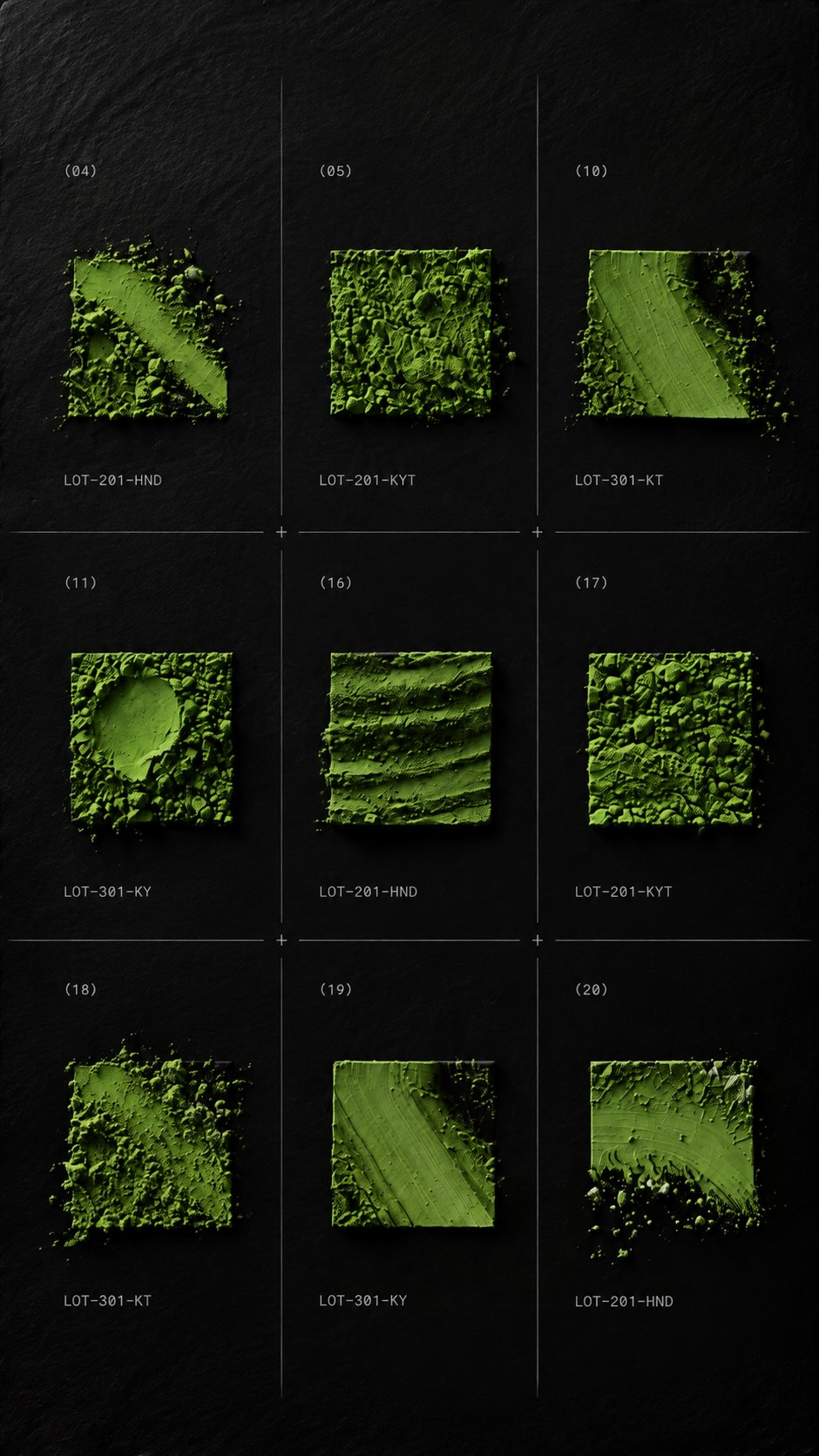
For iced lattes, buy Matsukaze: it is built to hold up under milk and the 100g bag is $1.58 a bowl. For a soft, nutty everyday cup with water or milk, buy Samidori ($30 for 30g). For whisking with water, buy Yomo no Kaori, the most aromatic and the highest grade of the three in the house's own lineup.

Samidori vs Matsukaze vs Yomo no Kaori at a glance
| Matsukaze | Samidori | Yomo no Kaori | |
|---|---|---|---|
| 30g tin | $32, in stock | $30, in stock | $32, in stock |
| 100g bag | $79, in stock | $72, sold out | $79, in stock |
| Cost per 2g bowl | $2.13 tin, $1.58 bag | $2.00 tin | $2.13 tin, $1.58 bag |
| Taste | Clean, balanced, green | Grassy, gently nutty, sweet finish | Lifted aroma, soft sweetness and umami |
| Best with | Milk, iced lattes | Milk or water | Water (usucha), soft lattes |
| Koicha (thick tea) | No | No | No |
Prices and stock from saintcha.com on November 16, 2026. All three are original, factory-sealed packs with the best-by date printed. Cost per bowl assumes 2g: a 30g tin makes about 15 bowls, a 100g bag about 50.
All three come from the same Uji tea house and all three are everyday usucha grades, so most reviews lump them together. This guide does the opposite: it puts them side by side with prices, where each one ranks inside the Yamamasa lineup, and which one belongs in your cup. If you would rather taste first, the Yamamasa Tasting Trio has one 30g tin of each for $88.


Who is Yamamasa Koyamaen?
Yamamasa Koyamaen is a family tea house in Ogura, a district of Uji in Kyoto Prefecture. The Koyama family farmed tea there from the Edo period, and the first Koyama Masajiro began selling tea commercially in 1861, according to the producer profile on Japanese Tea Pedia. The house is still family run and still owns its original gardens in Uji.
Two facts matter for this guide. First, the name Samidori is not just a label. In the 1930s and 1940s the third-generation head, also named Koyama Masajiro, worked with Uji farmer Hirano Jinnojo to select the cultivars Asahi, Samidori and Komakage. Kyoto Prefecture designated Asahi and Samidori as recommended varieties in 1954. Samidori is now one of the classic cultivars for tencha, the leaf that is ground into matcha, so a tin called Samidori from this house is a tea named after a plant the family helped bring into use.
Second, the house is known for storage. Sazen Tea credits Yamamasa with building the industry's first matcha plant with air conditioning and refrigerators used only for tea, and with selling the first canned matcha. That is a good reminder that freshness is half of what you pay for. Our guide on how to store matcha covers what to do once you open the tin.
Yamamasa Koyamaen and Marukyu Koyamaen are separate companies. Both are in Ogura and share the Koyamaen name, but they have different histories, gardens and blends. Marukyu dates to 1704.
Where do these three sit in the Yamamasa lineup?
Yamamasa makes eleven matcha, from top koicha grades down to everyday usucha. Sazen Tea, which ships from Kyoto, lists them in price order. The three teas in this guide are the three most affordable, and they are not equal:
| Tea | Type | Sazen Tea, 30g can |
|---|---|---|
| Ogurayama | Usucha | $28.08 |
| Yomo no Kaori | Usucha | $22.68 |
| Samidori | Usucha | $17.28 |
| Matsukaze | Usucha | $14.04 |
Prices from Sazen Tea's Yamamasa Koyamaen page, checked November 16, 2026, before shipping from Japan. Shown for ranking only.
In Kyoto, Yomo no Kaori costs about 1.6 times as much as Matsukaze. At SAINTCHA the two cost the same, $32 for 30g. If you shop by grade per dollar, Yomo no Kaori is the strongest value on our Yamamasa shelf. If you shop by what tastes best in milk, the ranking flips, because a lower usucha grade with more body is often the better latte tea.
How do the three taste?
Matsukaze: clean and balanced, made for milk
Matsukaze has a clean green aroma and a balanced, approachable flavor. It is not the most delicate bowl with water, and it is not trying to be. Its strength is that the green flavor is still there under 180ml of milk and ice. For a daily iced latte, the 100g bag at $79 brings the cost to about $1.58 a bowl.
Samidori: grassy, nutty and easy
Samidori has a fresh, grassy aroma with nutty undertones, gentle bitterness, a little umami and a clean, lingering sweetness. It is the most flexible of the three: soft enough to drink with water, round enough for a latte. At $30 it is also the lowest-priced matcha tin in stock at SAINTCHA today, which makes it a safe first matcha or a gift for someone whose habits you do not know.
Yomo no Kaori: the aromatic one
The name means fragrance all around, and aroma is what sets it apart. It drinks light and rounded, with gentle sweetness and soft umami and no harsh edge. Whisked with water, it is the nicest of the three. In milk it makes a smooth, mild latte; use 3g instead of 2g if you want more green flavor.

Which one should you buy?
- you mostly make iced or hot lattes
- you drink matcha every day and want the 100g bag
- you like a clear, green flavor through milk
- you switch between lattes and water
- you want the lowest-priced tin in stock
- you are buying a first matcha or a gift
- you whisk usucha with water most mornings
- aroma matters more to you than strength
- you want the highest grade of the three for the same $32
- you cannot decide and want to compare at home
- you want about 45 bowls at $1.96 each
- you are giving one gift to a matcha drinker
Want something bolder in milk than any of the three? Marukyu Aoarashi is brighter and more assertive. Our best matcha for lattes guide compares it with Matsukaze and Samidori by cost per cup, and the Marukyu Koyamaen matcha chart covers the other Ogura house tin by tin.
How to brew them
Sift first. Clumps cause more bad cups than the wrong tea does. No bamboo whisk? A frother or a lidded jar works, and our matcha whisk guide shows how. The Everyday Matcha Kit pairs Samidori with a sifter and a gold spoon for $51.98.
FAQ
Is Yamamasa Koyamaen matcha real Japanese matcha?
Yes. SAINTCHA sells Yamamasa Koyamaen's original factory-sealed 30g tins and 100g bags from Uji, Kyoto, with the best-by date printed. We are an independent retailer in Seattle, not affiliated with Yamamasa Koyamaen.
Which Yamamasa Koyamaen matcha is best for a latte?
Matsukaze. It keeps a clear green flavor under milk and ice, and the 100g bag brings it to about $1.58 a bowl. Samidori makes a softer, nuttier latte.
Is Samidori ceremonial grade?
Yamamasa sells it as an everyday usucha, meant to be whisked with water or used in milk. It is not a koicha grade. "Ceremonial grade" is a marketing term with no legal standard, so judge by producer, freshness and price instead.
Can I make koicha with any of these three?
No. Koicha needs a sweeter, less bitter tea. Read usucha vs koicha for what to look for.
Do you ship Yamamasa Koyamaen in the US?
Yes, within the US only, from Seattle. Economy shipping is $6.99 and free from $100. All sales are final; if a tin arrives damaged or wrong, email a photo to support@saintcha.com within 7 days and we will replace it.
